Federico García Lorca

1898–19364 books here

Find authors like Federico

About Federico García Lorca

Federico García Lorca (Fuente Vaqueros, Granada, 5 June 1898 - camino de Víznar a Alfacar, Granada, 18 August 1936) was a Spanish poet, playwright, and theatre director. He achieved international recognition as an emblematic member of the Generation of '27, a group consisting of mostly poets who introduced the tenets of European movements (such as symbolism, futurism, and surrealism) into Spanish literature. He was killed by Nationalist forces at the beginning of the Spanish Civil War. His remains have never been found.

Lorca universe is defined by a palpable systematism: poetry, drama and prose feed on obsessions - love, desire, sterility - and constant stylistic keys. The variety of shapes and tones never threatens that unity whose central issue is frustration.

Biography from Open Library.

Federico García Lorca books in order

  1. Poems

    Federico García Lorca

    The work of Federico Garcia Lorca, Spain's greatest modern poet, has long been admired for its emotional intensity and metaphorical brilliance.

    143 pages1937

  2. Bodas de sangre

    Federico García Lorca

    Lorca's Blood Wedding is a classic of twentieth-century theatre. The story is based on a newspaper fragment which told of a family vendetta and a bride who ran away with the son of the enemy family.

    106 pages1956

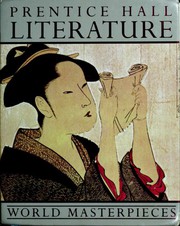
  3. Prentice Hall Literature--World Masterpieces

    Burton Beers, Anna Ahkmatova, Dante Alighieri, Yehuda Amichai, Margaret Atwood, Basho, Charles Baudelaire, Giovanni Boccaccio, Heinrich Böll, Jorge Luis Borges, Buson Yosa, Italo Calvino, Albert Camus, Антон Павлович Чехов, Ch'ien T'ao, To Li Chien, Po Chu-i, Colette, Confucius, Julio Cortázar, Rubén Darío, Isak Dinesen, Jean de La Fontaine, Marie de France, Tu Fu, Federico García Lorca, Gabriel García Márquez, Johann Wolfgang von Goethe, Nikolaĭ Vasilʹevich Gogolʹ, Günter Grass, Bessie Head, Heinrich Heine, Hitomaro Kakinomoto, Ὅμηρος, Lu Hsun, Victor Hugo, Henrik Ibsen, Kobayashi, Hideo, Franz Kafka, Yoshida Kenko, Omar Khayyam, Komachi Ono, Pär Lagerkvist, Stanisław Lem, Doris Lessing, Primo Levi, Niccolò Machiavelli, Najib Mahfouz, Thomas Mann, Christopher Marlowe, Guy de Maupassant, Czesław Miłosz, John Milton, Gabriela Mistral, Rasipuram Krishnaswamy Narayan, Pablo Neruda, Ōgai Mōri, Ovid, Blaise Pascal, Boris Leonidovich Pasternak, Octavio Paz, Luigi Pirandello, Plato, Pliny, Li Po, Александр Сергеевич Пушкин, Rainer Maria Rilke, Arthur Rimbaud, Manuel Rojas, Pierre de Ronsard, William Shakespeare, Sei Shōnagon, Александр Солженицын, Sophocles, Wole Soyinka, Jonathan Swift, Rabindranath Tagore, Лев Толстой, Toshiyori Minamoto, Chrétien de Troyes, Tsurayuki Ki, Pak, Tu-jin, Lao-Tze, Paul Valéry, François Villon, Nguyen Thi Vinh, Virgil, Andrei Vosnesensky, Derek Walcott, Wang, Wei, William Wordsworth, 川端康成 and Yevgeny Yevtushenko

    1991

  4. La casa de Bernarda Alba

    Federico García Lorca

    Bernarda Alba is a widow, and her five daughters are incarcerated in mourning along with her. One by one they make a bid for freedom, with tragic consequences.

    175 pages1991