Julia Alvarez
1950–10 books here
About Julia Alvarez
Born in New York City in 1950, Julia Alvarez's parents returned to their native country, Dominican Republic, shortly after her birth. Ten years later, the family was forced to flee to the United States because of her father’s involvement in a plot to overthrow the dictator, Trujillo.
Alvarez has written novels (How the García Girls Lost Their Accents, In the Time of the Butterflies, ¡Yo!, In the Name of Salomé, Saving the World, Afterlife), collections of poems (Homecoming, The Other Side/ El Otro Lado, The Woman I Kept to Myself), nonfiction (Something to Declare, Once Upon A Quinceañera, and A Wedding in Haiti), and numerous books for young readers (including the Tía Lola Stories series, Before We Were Free, finding miracles, Return to Sender and Where Do They Go?).
Alvarez’s awards include the Pura Belpré and Américas Awards for her books for young readers, the Hispanic Heritage Award, and the F. Scott Fitzgerald Award. In 2013, she received the National Medal of Arts from President Obama.
Biography from Open Library.
Julia Alvarez books in order
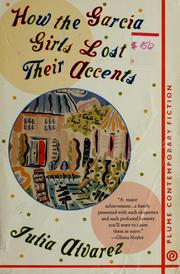
How the García girls lost their accents
In the 1960s, political tension forces the García family away from Santo Domingo and towards the Bronx.
How the Garcia Girls Lost Their Accents
It's a long way from Santo Domingo to the Bronx, but if anyone can go the distance, it's the Garcia girls.
In the Time of the Butterflies
It is November 25, 1960, and three beautiful sisters have been found near their wrecked Jeep at the bottom of a 150-foot cliff on the north coast of the Dominican Republic.
A Cafecito Story
"Throughout the Dominican Republic and Central America it is a household ritual to offer a "cafecito" (a small cup of dark, rich, potent coffee) to any visitor, especially a stranger.
Before we were free
Anita de la Torre never questioned her freedom living in the Dominican Republic. But by her 12th birthday in 1960, most of her relatives have emigrated to the United States, her Tio Toni has disappeared without a trace…
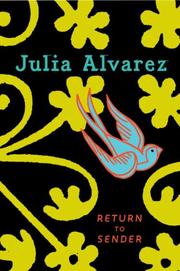
Return to sender
After Tyler's father is injured in a tractor accident, his family is forced to hire migrant Mexican workers to help save their Vermont farm from foreclosure. Tyler isn't sure what to make of these workers.
How the Garcia Girls Lost Their Accents
In the 1960s, political tension forces the García family away from Santo Domingo and towards the Bronx.