Thomas Hardy
1840–192812 books here
About Thomas Hardy
Thomas Hardy, OM was an English novelist and poet of the naturalist movement, although in several poems he displays elements of the previous romantic and enlightenment periods of literature, such as his fascination with the supernatural.
While he regarded himself primarily as a poet who composed novels mainly for financial gain, during his lifetime he was much better known for his novels, such as Tess of the d'Urbervilles and Far from the Madding Crowd, which earned him a reputation as a great novelist. The bulk of his fictional works, initially published as serials in magazines, were set in the semi-fictional land of Wessex (based on the Dorchester region where he grew up) and explored tragic characters struggling against their passions and social circumstances.
Biography from Open Library.
Thomas Hardy books in order
A Pair of Blue Eyes
Elfride Swancourt is the daughter of the Rector of Endelstow, a remote sea-swept parish in Corwall based on St Juliot, where Hardy began A Pair of Blue Eyes during the beginning of his courtship of his first wife, Emma.
Under the Greenwood Tree or, The Mellstock quire
Under the Greenwood Tree is the story of the romantic entanglement between church musician, Dick Dewey, and the attractive new school mistress, Fancy Day.
Far from the Madding Crowd
Independent and spirited Bathsheba Everdene has come to Weatherbury to take up her position as a farmer on the largest estate in the area.
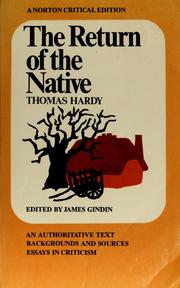
The Return of the Native
The native of the title is Clym Yeobright, who returns to the area from the bright society of Paris and, as any reader of Hardy knows, all is not smooth.
Two on a tower
"Lady Constantine breaks all the rules of social decorum when she falls in love with the beautiful youth Swithin St Cleeve, her social inferior and ten years her junior.
The Mayor of Casterbridge
Like many of Hardy’s novels, The Mayor of Casterbridge is set in the fictional county of Wessex in the mid 1800s.
The Woodlanders
When country-girl Grace Melbury returns home from her middle-class school she feels she has risen above her suitor, the simple woodsman Giles Winterborne.
Tess of the d'Urbervilles
An intimate portrait of a woman, one of literature's most admirable and tragic heroines...Tess Durbeyfield knows what it is to work hard and expect little.
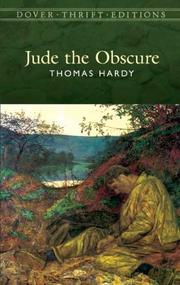
Jude the Obscure
Hardy's last work of fiction, Jude the Obscure is also one of his most gloomily fatalistic, depicting the lives of individuals who are trapped by forces beyond their control.
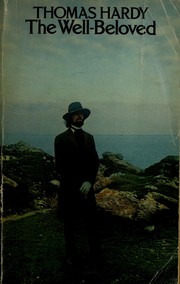
The well-beloved
Jocelyn Pierston, a sculptor of growing fame, is determined to find his ideal in womanhood, a quest that has led to many fruitless encounters.