Graham Greene
1904–199119 books here
About Graham Greene
Henry Graham Greene (2 October 1904 – 3 April 1991) was an English writer and journalist regarded by many as one of the leading novelists of the 20th century. Combining literary acclaim with widespread popularity, Greene acquired a reputation early in his lifetime as a major writer, both of serious Catholic novels, and of thrillers. He was shortlisted for the Nobel Prize in Literature several times. Through 67 years of writing, which included over 25 novels, he explored the conflicting moral and political issues of the modern world. The Power and the Glory won the 1941 Hawthornden Prize and The Heart of the Matter won the 1948 James Tait Black Memorial Prize and was shortlisted for the Best of the James Tait Black. Greene was awarded the 1968 Shakespeare Prize and the 1981 Jerusalem Prize. Several of his stories have been filmed, some more than once, and he collaborated with filmmaker Carol Reed on The Fallen Idol (1948) and The Third Man (1949). He converted to Catholicism in 1926 after meeting his future wife, Vivien Dayrell-Browning. Later in life he took to calling himself a "Catholic agnostic".
Source: Wikipedia
Biography from Open Library.
Graham Greene books in order
Stamboul train
Published in 1932 as an 'entertainment', Graham Greene's gripping spy thriller unfolds aboard the majestic Orient Express as it crosses Europe from Ostend to Constantinople.
The Third Man
Initially written as a screenplay Greene later transferred the film treatment to novel form as a novella, published together with The Fallen Idol.
A Gun for Sale
Raven is an ugly man dedicated to ugly deeds. His cold-blooded killing of a European Minister of War is an act of violence with chilling repercussions, not just for Raven himself but for the nation as a whole.
Brighton Rock
An atmospheric crime thriller featuring a teenage sociopath intent on becoming the underworld boss of Brighton.
The confidential agent
D. is sent on a wartime mission to buy coal in England. Trusted by no one, he trusts nobody.
The Power and the Glory
One of Greene’s most powerful novels, the book takes as its theme the era of religious suppression in Mexico during the early 1930’s.
The Quiet American
One of Graham Greene's best works. The story is set at the time of the French war against the Viet Cong and tells the story of liberal British journalist Thomas Fowler, his mistress Phuong, and their relationship with…
The Ministry of Fear
"For Arthur Rowe the trip to the charity fete was a joyful step back into adolescence, a chance to forget the nightmare of the Blitz and the aching guilt of having mercifully murdered his sick wife.
The heart of the matter
Focusing on a British police officer in an unnamed West African colony, this novel attempts to show, along with the socially restricted lives of colonists in Africa, the effects of sin on a devout catholic.
The End of the Affair
"This is a record of hate far more than of love," writes Maurice Bendrix in the opening passages of The End of the Affair, of which he is the narrator.
Our Man in Havana
Wormold's daughter had reached an expensive age - so he accepted a mysterious Englishman's offer of extra income. All he has to do is run agents, file reports, and spy.
A Burnt-Out Case
Querry is assigned to a leper colony on the upper reaches of the Congo, run by a doctor as lacking in faith as he is himself.
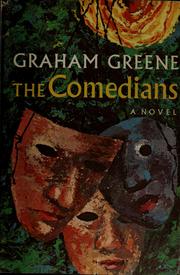
The Comedians
"Three men, Brown, Smith, and Jones, meet on a ship bound for Haiti, where "Papa Doc" and the Tontons Macoute rule, with sinister secret police."
Travels with my aunt
Greeneland has been described often as a land bleak and severe. A whisky priest dies in one village, a self-hunted man lives with lepers in another.
Great Short Stories of the World
The leader of the people / John Steinbeck Mr. Know-all / W. Somerset Maugham Vanka / Anton Chekhov The happy prince / Oscar Wilde The old demon / Pearl S. Buck The sailor-boy's tale / Isak Dinesen Young Archimedes /…
The Human Factor
"In the low-key but treacherous domain of "the firm," Maurice Castle performs routine intelligence duties that are less than world-shattering. Then a new security chief, "a broom," is appointed.
Monsignor Quixote
"A direct descendant of his famous namesake, Father Quixote is a humble parish priest. By chance he is advanced to Monsignor, resulting in furor in the bishopric.
The Tenth Man
In a prison in occupied France one in every ten men is to be shot. The prisoners draw lots among themselves - and for rich lawyer Louis Chavel, it seems that his whole life has been leading up to an agonizing and…